
All of the following is extracted from my study of Dr. Dilday’s Revelation 8 writings in his Matthew Poole translations.
I did not extract the actual Poole translation…it’s much longer.
But the useful summary of the verse with scripture reference, Dr. Dilday’s own summary in Bold text, some of the images and some of his brief audio sermon notes.. it takes about 2 hours to review all this, along with the historical theologian’s notes he quotes in the comments.
Hopefully summarizing this in one place is useful.
Poole’s Outline of Revelation 8
Poole on Revelation 8:1: A Half-Hour’s Silence in Heaven
Verse 1:[1] And (Rev. 6:1) when he had opened the seventh seal, there was silence in heaven about the space of half an hour.
And when he; that is, the Lamb, mentioned Revelation 5:6, 7, who took the book out of the hand of him that sat upon the throne, the book of God’s counsels, and had now revealed mysteriously to John what should come to pass (under all the pagan emperors) to the church of Christ, until the time of Constantine the Great, who, (as was said,) about the year 325, had settled the Christian religion, and shut up all the idols’ temples, having conquered the apostate Licinius. Had opened the seventh seal; he cometh now to open the seventh seal, that is, to reveal to John what should be in the succeeding time of the church to the end of the world. There was silence in heaven about the space of half an hour: but before the great evils should break out, which were to come to pass in this time, there was in the church a rest for a small time; for from the year 317, when Constantine bare the greatest sway in the empire, or 325, when he had got a full victory over Licinius, the church had a great peace for a little time, till 339, when the empire being divided, and Constantius having the eastern part, and Constans the western, (both sons of Constantine,) Constantius, being an Arian, (who denied the Godhead of Christ,) began again to persecute the Christians; and after him Julian, who apostatized to paganism. But after him they had a little further respite to the year 395, when Theodosius died, and the Christians’ quiet died with him. I rather choose to interpret this thus, than with those who understand the silence in heaven, of a silence in the third heavens, in allusion to the Jewish order; who, though they sung during the time of the sacrifice, and played upon instruments of music all that time, yet kept silence while the incense was offering. For (as divers have noted) it seemeth hard to judge, that in this Revelation there should be no mention of that short truce which the church had during the reign of Constantine, and for a small time after.
Dr. Dilday’s Sermon: “An Half-Hour’s Silence” (Revelation 8:1)
https://www.sermonaudio.com/sermoninfo.asp?SID=641311315410
1) Introduction
2) Analysis
a) Context
b) Verse 1
3) Use: Let us make good use of the season of mercy.
a) Civil
b) Personal
Verse 2:[1] (Tob. 12:15;[2] Matt. 18:10; Luke 1:19) And I saw the seven angels which stood before God; (2 Chron. 29:25-28) and to them were given seven trumpets.

The seven angels which stood before God; the seven mentioned hereafter, which blew with the trumpets; for we presently read, that seven trumpets were given to them. Trumpets were used to call the people together, to proclaim festivals, and in war. The use of these trumpets we shall hereafter read, which was to proclaim the will and counsels of God, as to things to come.
Dr. Dilday’s Sermon: “The Seven Angelic Trumpeters” (Revelation 8:2)
https://www.sermonaudio.com/sermoninfo.asp?SID=613131117428
1) Introduction
2) Analysis
a) Context
b) Verse 2
3) Doctrine: God is longsuffering, and slow to anger.
a) Our text
b) Scripture proofs
c) Uses
Verse 3:[1] And another angel came and stood at the altar, having a golden censer; and there was given unto him much incense, that he should offer it with (Rev. 5:8) the prayers (or, add it to the prayers[2]) of all saints upon (Ex. 30:1; Rev. 6:9) the golden altar which was before the throne.
And another angel came; by this angel I understand Christ, as do many very valuable authors; nor, indeed, can what is said of this angel agree to any other but him, who is called an Angel, Genesis 48:16, and the Angel of the covenant, Malachi 3:1. Here is a manifest allusion to the order of the Jewish worship; they had an altar of incense, Exodus 30:1, upon which the high priest was to burn incense every morning and evening, Exodus 30:7, 8. Whilst the priest was burning incense, as appears, Luke 1:10, the people, were without, praying. Christ is here represented as having a golden censer. The high priest’s censer amongst the Jews was of brass; but he was a more excellent High Priest. And there was given unto him much incense; by which is meant the infinite merit of his death, to be offered up by himself (who is the golden altar) with the prayers of all his saints. By all this Christ is represented to us, as interceding for his saints that were to live after this time, during all troubles that were immediately to begin, and to follow on, during the reign of antichrist.
Loraine Boettner’s Roman Catholicism: ‘We object to the elaborate ceremonials and gorgeous furnishings of Romanism, not because of any lack of aesthetic taste, but on theological grounds. Such things may be all right in a theater, but they are out of place in a Christian church. Within proper limits dignity and beauty are characteristics which are proper in the worship of God, as indeed is clear from the prescriptions for worship which were given to the children of Israel. But the various elements of the Old Testament ritual were types and shadows portraying God’s plan of salvation. Their purpose was to present the Gospel in picture to a primitive people. But those things were done away in Christ, and no others were put in their place (Hebrews 8:5; 9:23; 10:1). The only references to incense, for example, in connection with the New Testament church are found in the book of Revelation where it is used figuratively, referring to the prayers of God’s people (Revelation 5:8; 8:3-4). Romanism is in this respect a recrudescence of Judaism, and in its ceremonialism stands much closer to Judaism than to New Testament Christianity. It has a delight in the picture language of ceremonies that were designed for the childhood of the church, and it still is fascinated with the beauty of the temple and its gorgeous ritual.’
Dr. Dilday’s Sermon: “The Only Mediator”
https://www.sermonaudio.com/sermoninfo.asp?SID=724131737333
1) Introduction
2) Analysis
a) Context
b) Verse 3
i) Exposition
c) The identity of this “other angel”
i) Clearing the ground
ii) The Revelation 7 parallel
(1) Five arguments
(a) #1
(b) #2
Revelation 7:2a: “And I saw another angel ascending from the east (ἀπὸ ἀνατολῆς ἡλίου)…”
Luke 1:78, 79: “Through the tender mercy of our God; whereby the dayspring (ἀνατολὴ) from on high hath visited us, To give light to them that sit in darkness and in the shadow of death, to guide our feet into the way of peace.”
Malachi 4:2: “But unto you that fear my name shall the Sun of righteousness arise (ἀνατελεῖ) with healing in his wings…
Verse 4:[1] And (Ps. 141:2; Luke 1:10) the smoke of the incense, which came with the prayers of the saints, ascended up before God out of the angel’s hand.
The smoke of the incense, etc.: This only denotes the acceptableness of Christ’s intercession, and God’s people’s prayers, through the virtue of that intercession, unto God.
Dr. Dilday’s Sermon: “The Prayers of All Saints”
https://www.sermonaudio.com/sermoninfo.asp?SID=8113545371
1) Introduction
2) Analysis
a) Context
b) Verse 4
3) Doctrine: All saints are praying people.
a) Scripture proofs
b) Use
4) Doctrine: Times of danger are praying times.
a) Scripture proofs
b) Use
5) Doctrine: The prayers of the saints, rising out of the hand of the Mediator, are acceptable to God.
a) Scripture proofs
b) Uses
Verse 5:[1] And the angel took the censer, and filled it with fire of the altar, and cast it into (or, upon[2]) the earth: and (Rev. 16:18) there were voices, and thunderings, and lightnings, (2 Sam. 22:8; 1 Kings 19:11; Acts 4:31) and an earthquake.
I doubt not but by fire here, is to be understood the wrath of God, often in holy writ compared to fire, poured out upon the Roman empire, or the visible church. Upon which followed great judgments, and confusions, and tumults, expressed here, or ushered in, as before, Revelation 6:1, with thunderings; which being here more generally mentioned, are by and by more particularly expressed.
Verse 6:[8] And the seven angels which had the seven trumpets prepared themselves to sound.
The seven angels, etc.: The angels are God’s ministers, by which he bringeth his counsels to pass in the world: they hearing the thunderings and voices, knew the time was come when they were to begin the execution of God’s judgments upon the earth; the execution of which was intrusted to them, and they are therefore set out (though they be always ready) after the manner of men, preparing themselves to execute what God had intrusted them with the execution of.
Dr. Dilday’s Sermon: “A Light in the Darkness”
https://www.sermonaudio.com/sermoninfo.asp?SID=911138273410
1) Analysis
a) Context
b) Historical fulfillment
i) Descent into darkness
ii) A light in the darkness
(1) Augustine
Confessions 10:42, 43: “Whom could I find to reconcile me to thee? Should I have approached the angels? What kind of prayer? What kind of rites? Many who were striving to return to thee and were not able of themselves have, I am told, tried this and have fallen into a longing for curious visions and deserved to be deceived. Being exalted, they sought thee in their pride of learning, and they thrust themselves forward rather than beating their breasts. 391 Cf. the parable of the Pharisee and the Publican, Luke 18:9-14. And so by a likeness of heart, they drew to themselves the princes of the air,392 Cf. Eph. 2:2. their conspirators and companions in pride, by whom they were deceived by the power of magic. Thus they sought a mediator by whom they might be cleansed, but there was none. For the mediator they sought was the devil, disguising himself as an angel of light. 393 2 Cor. 11:14. And he allured their proud flesh the more because he had no fleshly body. ¶ They were mortal and sinful, but thou, O Lord, to whom they arrogantly sought to be reconciled, art immortal and sinless. But a mediator between God and man ought to have something in him like God and something in him like man, lest in being like man he should be far from God, or if only like God he should be far from man, and so should not be a mediator. That deceitful mediator, then, by whom, by thy secret judgment, human pride deserves to be deceived, had one thing in common with man, that is, his sin. In another respect, he would seem to have something in common with God, for not being clothed with the mortality of the flesh, he could boast that he was immortal. But since ‘the wages of sin is death,’ 394 Rom. 6:23. what he really has in common with men is that, together with them, he is condemned to death. ¶ But the true Mediator, whom thou in thy secret mercy hast revealed to the humble, and hast sent to them so that through his example they also might learn the same humility—that ‘Mediator between God and man, the man Christ Jesus,’ 395 1 Tim. 2:5. appeared between mortal sinners and the immortal Just One. He was mortal as men are mortal; he was righteous as God is righteous; and because the reward of righteousness is life and peace, he could, through his righteousness united with God, cancel the death of justified sinners, which he was willing to have in common with them. Hence he was manifested to holy men of old, to the end that they might be saved through faith in his Passion to come, even as we through faith in his Passion which is past. As man he was Mediator, but as the Word he was not something in between the two; because he was equal to God, and God with God, and, with the Holy Spirit, one God. ¶ How hast thou loved us, O good Father, who didst not spare thy only Son, but didst deliver him up for us wicked ones! 396 Cf. Rom. 8:32. How hast thou loved us, for whom he who did not count it robbery to be equal with thee ‘became obedient unto death, even the death of the cross’397 Phil. 2:6-8.! He alone was ‘free among the dead.’ 398 Cf. Ps. 88:5; see Ps. 87:6 (Vulgate). He alone had power to lay down his life and power to take it up again, and for us he became to thee both Victor and Victim; and Victor because he was the Victim. For us, he was to thee both Priest and Sacrifice, and Priest because he was the Sacrifice. Out of slaves, he maketh us thy sons, because he was born of thee and did serve us. Rightly, then, is my hope fixed strongly on him, that thou wilt ‘heal all my diseases’399 Ps. 103:3. through him, who sitteth at thy right hand and maketh intercession for us. 400 Cf. Rom. 8:34. Otherwise I should utterly despair. For my infirmities are many and great; indeed, they are very many and very great. But thy medicine is still greater. Otherwise, we might think that thy word was removed from union with man, and despair of ourselves, if it had not been that he was ‘made flesh and dwelt among us.’”
(2) The Augustinians
(3) Vigilantius
2) Doctrine: Even in times of great declension in the Visible Church, the Lord preserves a remnant for Himself.
Westminster Confession of Faith 25:5: The purest Churches under heaven are subject both to mixture and error; and some have so degenerated, as to become no Churches of Christ, but synagogues of Satan. Nevertheless, there shall be always a Church on earth, to worship God according to His will.
3) Use: Beware of the errors of the times.
4) Use: Be courageous when standing for truth, even when in a great minority.
Dr. Dilday’s Sermon: “Clergy? Laity?”
https://www.sermonaudio.com/sermoninfo.asp?SID=951392425
1) Introduction
2) Analysis
3) The Clergy-Laity Distinction
a) The Roman model
b) Terminology
Κλῆρος/clergy, lot or inheritance
Λαϊκός/laity, of the common people
c) History of the terminology
i) Bible
Deuteronomy 9:29: “Yet they are thy people and thine inheritance (κλῆρός σου, in the Septuagint), which thou broughtest out by thy mighty power and by thy stretched out arm.”
ii) Late second century
iii) Third century
iv) Late fourth century
v) Middle Ages
vi) The Reformation
(1) Luther’s view
(2) The general view of the Reformation Churches
(3) The Protestant Work-Ethic
4) Application
a) Relevance
b) Between Scylla and Charybdis (again)
c) Call to labor
Dr. Dilday’s Sermon: “Degrees of Declension, Part 3”
https://www.sermonaudio.com/sermoninfo.asp?SID=82613919370
1) Analysis
a) Context
b) Historical fulfillment
i) General
ii) Progress of the error
(1) The innocent seeds
(2) Problematic early developments
(3) Additional surmises
(4) Symphonic Antichristianism
2) Use: Let us be careful not to lose the prophetic voice of Christ.
a) Christ—the prophet par excellence
b) The warnings of history
c) Application
3) Use: Let us point men to the Savior Christ.
a) The purpose of the Church
b) A subtle slip
Dr. Dilday’s Sermon: “Degrees of Declension, Part 2”
https://www.sermonaudio.com/sermoninfo.asp?SID=821131317443
1) Analysis
a) Context
b) Historical Fulfillment
i) General
ii) Progress of the error
(1) The innocent seeds
The Martyrdom of Ignatius 6: “Then, being immediately thrown in, according to the command of Cæsar given some time ago, the public spectacles being just about to close (for it was then a solemn day, as they deemed it, being that which is called the thirteenth1430 The Saturnalia were then celebrated. in the Roman tongue, on which the people were wont to assemble in more than ordinary numbers1431 Literally, “they came together zealously.” ), he was thus cast to the wild beasts close beside the temple, 1432 The amphitheatre itself was sacred to several of the gods. [But (παρὰ τῷ ναῷ) the original indicates the cella or shrine, in the centre of the amphitheatre where the image of Pluto was exhibited. A plain cross, until the late excavations, marked the very spot.] that so by them the desire of the holy martyr Ignatius should be fulfilled, according to that which is written, ‘The desire of the righteous is acceptable1433 Prov. x. 24. [to God],’ to the effect that he might not be troublesome to any of the brethren by the gathering of his remains, even as he had in his Epistle expressed a wish beforehand that so his end might be. For only the harder portions of his holy remains were left, which were conveyed to Antioch and wrapped1434 Or, “deposited.” in linen, as an inestimable treasure left to the holy Church by the grace which was in the martyr.”
Epistle concerning the Martyrdom of Polycarp 17, 18: But when the adversary of the race of the righteous, the envious, malicious, and wicked one, perceived the impressive nature of his martyrdom, and [considered] the blameless life he had led from the beginning, and how he was now crowned with the wreath of immortality, having beyond dispute received his reward, he did his utmost that not the least memorial of him should be taken away by us, although many desired to do this, and to become possessors of his holy flesh. For this end he suggested it to Nicetes, the father of Herod and brother of Alce, to go and entreat the governor not to give up his body to be buried, lest, said he, forsaking Him that was crucified, they begin to worship this one. This he said at the suggestion and urgent persuasion of the Jews, who also watched us, as we sought to take him out of the fire, being ignorant of this, that it is neither possible for us ever to forsake Christ, who suffered for the salvation of such as shall be saved throughout the whole world (the blameless one for sinners), nor to worship any other. For Him indeed, as being the Son of God, we adore; but the martyrs, as disciples and followers of the Lord, we worthily love on account of their extraordinary affection towards their own King and Master, of whom may we also be made companions and fellow disciples! 18. The centurion then, seeing the strife excited by the Jews, placed the body in the midst of the fire, and consumed it. Accordingly, we afterwards took up his bones, as being more precious than the most exquisite jewels, and more purified than gold, and deposited them in a fitting place, whither, being gathered together, as opportunity is allowed us, with joy and rejoicing, the Lord shall grant us to celebrate the anniversary of his martyrdom, both in memory of those who have already finished their course, and for the exercising and preparation of those yet to walk in their steps.
Cyrian’s Epistles 34: “They merited from the Lord palms and crowns by their illustrious passion. We always offer sacrifices for them, as often as we celebrate the passions and days of the martyrs with anniversary commemorations.”
2) Doctrine: Sin takes occasion by the harmless, even by the good.
a) Scripture proofs
b) Applications
3) Use: Let us be careful how we are using the Fathers.
Dr. Dilday’s Sermon: “Degrees of Declension, Part 1”
https://www.sermonaudio.com/sermoninfo.asp?SID=8141398398
1) Introduction
2) Analysis
a) Context
b) Historical fulfillment
Dean Waddington’s History of the Church 1:232: “So definite and broad was the space which in this point separated the two religions of Christianity and Paganism, that is seemed impossible that…a compromise could ever be effected between principles so fundamentally hostile. Yet the contrary result took place: and a reconciliation, which in the beginning of the fourth century could not easily have been imagined, was virtually accomplished before its termination…. Enthusiasm [respecting the martyrs] easily passed into superstition. Those who had sealed a Christian’s faith by a martyr’s death were exalted above the condition of men, and enthroned among superior beings. Superstition gave birth to credulity. Those who sat among the powers of heaven might sustain by miraculous assistance their votaries on earth…. Hence the stupid veneration for bones and relics. It was inculcated that prayer was never so surely efficacious as when offered at the tomb of some saint.”
Gibbon: “If in the beginning of the fifth century Tertullian or Lactantius had been suddenly raised from the dead, to assist at the festival of some popular saint or martyr, they would have gazed with astonishment and indignation on the profane spectacle, which had succeeded to the pure and spiritual worship of a Christian congregation. As soon as the doors of the Church were thrown open, they must have been offended by the smoke of incense, the perfume of flowers, and the glare of lamps and tapers, which diffused at noon-day a gaudy, superfluous, and in their opinion sacrilegious light. If they approached the balustrade of the altar, they made their way through the prostrate crowd; consisting for the most part of strangers and pilgrims, who resorted to the city on the vigil of the feast, and who already felt the strong intoxication of fanaticism, and perhaps of wine. Their devout kisses were imprinted on the walls and pavement of the sacred edifice; and their fervent prayers were directed, whatever might be the language of their Church, to the bones, the blood, or the ashes of the saints, which were usually concealed by a linen or silken veil from the eyes of the vulgar. They frequented the tombs of the martyrs, in hope of obtaining from their powerful intercession every sort of spiritual, but more especially of temporal blessings…. [In case of the fulfillment of their wishes] they again hastened to the martyrs’ tombs, to celebrate with grateful thanksgiving their obligations to the memory and relics of those heavenly patrons. The walls were hung round with symbols of the favours which they had received;—eyes and hands and feet of gold and silver: and edifying pictures, which could not long escape the abuse of indiscreet or idolatrous devotions, represented the image, the attributes, and the miracles of the tutelary saint.”
Mosheim’s Ecclesiastical History 2:2:4:2: “When Gregory perceived that the ignorant multitude persisted in their idolatry on account of the pleasures and sensual gratifications which they enjoyed at the Pagan festivals, he granted them permission to indulge themselves in the like pleasures, in celebrating the memory of the holy martyrs; hoping that in process of time they would return of their own accord to a more virtuous and regular course of life.”
Eunapius the Pagan (396): “These are the gods the earth now-a-days brings forth, —these the intercessors with the gods, —men called martyrs; before whose bones and skulls, pickled and salted, the monks kneel, and lay prostrate, covered with filth and dust.”
Faustus the Manichean (400): You have but exchanged the old idols for the martyrs, and offer the latter the same prayers as once to the former.”
Geisler: “Christians were now but seldom called upon to address their prayers to God; the usual mode being only to pray to some saint for his intercession.”
3) Use: Let us be universally conscientious, not allowing the least sin.
Dr. Dilday’s Sermon: “A Neglected and Offended High Priest”
https://www.sermonaudio.com/sermoninfo.asp?SID=85131059561
1) Introduction
2) Analysis
a) Context
b) Verse 5
c) Verse 6
3) Doctrine: Christ is jealous over His Mediatorial Office.
4) Doctrine: The wrath of Jehovah-Jesus is terrible.
Verse 7:[1] The first angel sounded, (Ezek. 38:22) and there followed hail and fire mingled with blood, and they were cast (Rev. 16:2) upon the earth: and the third part (Is. 2:13; Rev. 9:4) of trees was burnt up, and all green grass was burnt up.
The first angel sounded; the first of the seven angels to whom the seven trumpets were given, verse 2, began to execute his commission; the consequents of which were hail and fire mingled with blood, cast upon the earth: by which some understand the primitive church’s persecutions by the Jews and the heathen emperors; but these were over. Some understand God’s revenge upon the Jews; but this also was taken some hundreds of years since. Some understand unseasonable weather in many parts of the world; but we read nothing like this in history. Some understand contests happening in the church; others understand heresies. But I cannot but rather agree with the reverend Mr. Mede, who expounds it of great troubles, and blood, and slaughter which should happen; and thinks that this prophecy began to be fulfilled about the death of Theodosius, AD 395. For in this very year (saith he) Alaricus the king of the Goths[19] brake into Macedonia,[20] with a great army went into Thessalia,[21] and so into Achaia,[22] Peloponnesus,[23] Corinth,[24] Argos,[25] Sparta,[26] burning, wasting, and ruining all places; and so went on till the year 400; then fell upon the eastern empire, and committed the same outrages in Dalmatia[27] and Hungary;[28] then went into Stiria[29] and Bavaria,[30] thence into Italy and to Venice.[31] After this, in the year 404, these barbarous nations invaded Italy, and took divers places. In the year 406 the Vandals[32] and Alans,[33] with many others, invaded France, Spain, and Africa: all which he proveth from the testimony of Jerome, Letters 3:11. This he judgeth the effect of the first angel’s sounding, and to have been signified by the hail and fire mingled with blood, consonant to other scriptures. Isaiah, in Isaiah 28:2, compareth Shalmaneser to a storm of hail; and, in Isaiah 30:30, he so likeneth the ruin to come upon the Assyrians. By the trees burnt up, are (saith he) the great and rich men to be understood, ordinarily in Scripture compared to trees, Isaiah 2:13; 14:8; Zechariah 11:2; and by the green grass, the ordinary common people. Thus he judgeth the effects of this first trumpet’s sounding to have been determined in fifteen years, namely, from the year 395 to 410.

Dr. Dilday’s Sermon: “The First Trumpet, Part 3”
https://www.sermonaudio.com/sermoninfo.asp?SID=1015131220331
1) Analysis
a) Context
b) Verse 7
i) “The first angel sounded”
ii) “And there followed hail and fire mingled with blood, and they were cast upon the earth”
(1) Bare images
(2) Historical fulfillment
iii) “And the third part of trees was burnt up, and all green grass was burnt up”
(1) Bare images
(2) Historical fulfillment
2) Meditation upon Baptism
Dr. Dilday’s Sermon: “The First Trumpet, Part 2”
https://www.sermonaudio.com/sermoninfo.asp?SID=101013919584
1) Analysis
a) Context
b) Verse 7
i) “The first angel sounded”
ii) “And there followed hail and fire mingled with blood, and they were cast upon the earth”
(1) Bare images
(2) Scripture parallels
(a) Hail
(b) Fire
(c) Hail and fire together
(d) Blood
iii) “And the third part of trees was burnt up, and all green grass was burnt up”
2) Doctrine: Desolating judgments, in and of themselves, do not move men to repentance; repentance is a special grace of God.
a) Our text
b) Repentance as a grace
Westminster Larger Catechism 76: What is repentance unto life? Repentance unto life is a saving grace, wrought in the heart of a sinner by the Spirit and word of God, whereby out of the sight and sense, not only of the danger, but also of the filthiness and odiousness of his sins, and upon the apprehension of God’s mercy in Christ to such as are penitent, he so grieves for and hates his sins, as that he turns from them all to God, purposing and endeavouring constantly to walk with him in all the ways of new obedience.
c) Applications
3) Doctrine: God’s judgments are by measure.
Dr. Dilday’s Sermon: “The First Trumpet, Part 1”
https://www.sermonaudio.com/sermoninfo.asp?SID=930131334482
1) Analysis
a) Context
i) The Sixth Seal
ii) The Seventh Seal
b) Verse 7
i) “The first angel sounded”
ii) “And there followed hail and fire mingled with blood, and they were cast upon the earth”
iii) “And the third part of trees was burnt up, and all green grass was burnt up”
2) Meditation on the Lord’s Supper
a) Causes of the Lord’s displeasure
b) Applications to the Table
Dr. Dilday’s Sermon: “The Comforting Sounds…of War?”
https://www.sermonaudio.com/sermoninfo.asp?SID=920131059262
1) Introduction
2) Analysis
a) Context
b) Verse 7a: the trumpet imagery
i) The analogy of the scroll with its seals
ii) The trumpets
(1) Suited to the context of the altar
(2) Uses also suited to the context
(a) Primary text: Numbers 10:1-10
(b) The sounding at war-time
(c) The sounding marking progress
(d) Summary
3) Doctrine: The Scripture is to be interpreted with constant regard to the context.
4) Meditation upon the dangers facing America
Verse 8:[1] And the second angel sounded, (Jer. 51:25; Amos 7:4) and as it were a great mountain burning with fire was cast into the sea: (Rev. 16:3) and the third part of the sea (Ezek. 14:19) became blood…
Verse 9:[8] (Rev. 16:3) And the third part of the creatures which were in the sea, and had life, died; and the third part of the ships were destroyed.
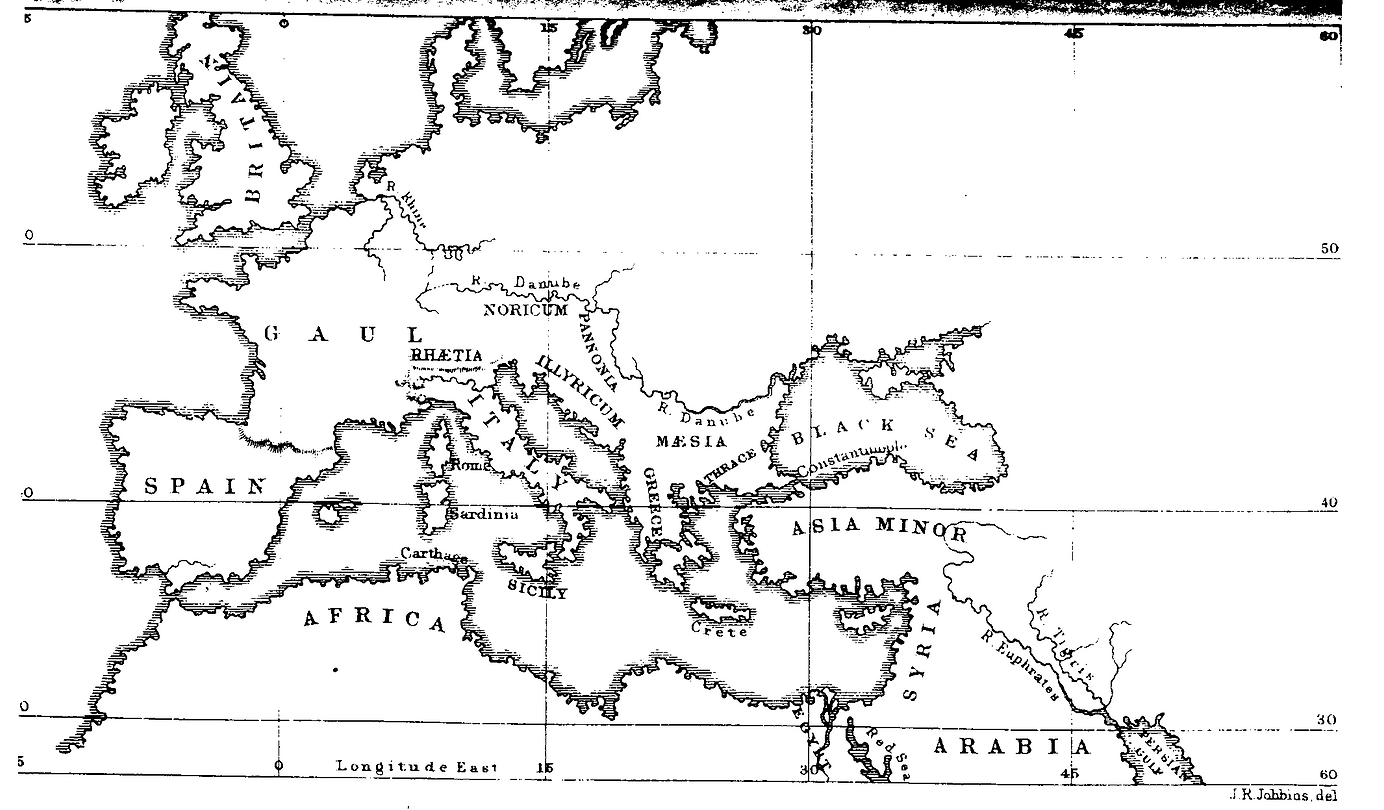
There is a great variety of senses also about this mountain of fire cast into the sea. Some by it understand things happening in Judea; but this had been not to have showed John the things which should be, but which had been. Others will have the devil understood; others, the power of the Roman empire; others, some great war stirred up amongst people; others, some notable heresy or heretic; others, some famous persons in the church: but I most like Mr. Mede’s notion again here, who understands by this mountain, Rome, the seat of the western empire; great cities being called mountains in Scripture phrase, Isaiah 37:24; Jeremiah 51:25. And the third part of the sea became blood: this phrase speaks only the great effusion of blood upon the taking of Rome by its enemies.
And the third part, etc.: Phrases all signifying the miserable catastrophe that should follow the destruction of this city, by the slaughter of men, the ruin of houses and towns in Italy, etc. History (as Mr. Mede showeth) excellently agreeth with this. In the year 410, Rome was taken by Alaricus; this was followed with great devastations both in France and Spain. Honorius,[10] to recover the empire, was glad to give the Goths a seat and government in France, and the Burgundians and Vandals a place near unto the river Rhone; and, AD 415, to the Vandals a place in Spain; and, AD 455, Rome was again taken by Gensericus the Vandal,[11] who divided the whole empire into ten kingdoms: 1. That of the Britons, ruled by Vortimer.[12] 2. The Saxons, ruled by Hengist.[13] 3. The Franks, ruled by Childeric.[14] 4. The Burgundians, ruled by Gundericus.[15] 5. The Visigoths, ruled by Theodoricus II.[16] 6. The Alans and Suevi,[17] ruled by Riciarius.[18] 7. The Vandals, ruled by Gensericus. 8. The Germans, ruled by Sumanus.[19] 9. The Ostrogoths,[20] ruled by Theodemirus.[21] 10. The Grecians, ruled by Marcianus.[22] This is the sum of what Mr. Mede saith, and to this tract of time, betwixt the years 410 and 455, the second trumpet seemeth to relate.
Dr. Dilday’s Sermon: “The Second Trumpet, Part 2”
https://www.sermonaudio.com/sermoninfo.asp?SID=10311310315910
1) Analysis
a) Context
b) Verse 8
i) “And the second angel sounded”
ii) “And as it were a great mountain burning with fire was cast into the sea”
iii) “And the third part of the sea became blood”
iv) Historical fulfillment
c) Verse 9
i) “And the third part of the creatures which were in the sea, and had life, died”
ii) “And the third part of the ships were destroyed”
iii) Historical fulfillment
2) Doctrine: God punishes the Antichristianism and idolatry of the Visible Church most strictly.
3) Doctrine: God raises up and puts down kings and kingdoms.
Dr. Dilday’s Sermon: “The Second Trumpet, Part 1”
https://www.sermonaudio.com/sermoninfo.asp?SID=1021131647547
1) Introduction
2) Analysis
a) Context
b) Verse 8
i) “And the second angel sounded”
ii) “And as it were a great mountain burning with fire was cast into the sea”
iii) “And the third part of the sea became blood”
c) Verse 9
i) “And the third part of the creatures which were in the sea, and had life, died”
ii) “And the third part of the ships were destroyed”
3) Doctrine: When a nation is under God’s judgment, these periods of affliction and rest are not uncommon.
4) Doctrine: This pattern of affliction and rest magnifies both the goodness and the justice of God.
a) Goodness
b) Justice
Verse 10:[1] And the third angel sounded, (Is. 14:12; Rev. 9:1) and there fell a great star from heaven, burning as it were a lamp, (Rev. 16:4) and it fell upon the third part of the rivers, and upon the fountains of waters…
There fell a great star from heaven: stars, in their metaphorical notion, signify some eminent persons in the state, or in the church; accordingly interpreters are divided in their senses; some thinking that it is meant of a political star, some eminent civil governor, and apply it to Caesar Augustulus, who, about the year 480, was forced to give over the empire, by Odoacer;[13] of him Mr. Mede understands this prophecy. Others understand it of some ecclesiastical star, who apostatized, and apply it to Pelagius. I do rather incline to those who apply it to some ecclesiastical star; and Pelagius might be pointed at, as probably as any other in these times, for he was a great professor, and so burned as a lamp. And it fell upon the third part of the rivers, and upon the fountains of waters; and did corrupt a great part of the church.
Verse 11:[14] (Ruth 1:20) And the name of the star is called Wormwood: (Ex. 15:23; Jer. 9:15; 23:15) and the third part of the waters became wormwood; and many men died of the waters, because they were made bitter.
The name of the star is called Wormwood: Pelagius’ doctrine was as bitter as wormwood; and he was the ruin of many souls. But if any do rather choose to understand it of a political star, Mr. Mede’s notion bids as fair for the sense as any, because the western empire determined in Augustulus, and he reigned but a very short time; and he was a prince of many sorrows and afflictions, and many perished with him in those sorrows and afflictions which he underwent. Whether we understand it of some eminent political magistrate, (such was Augustulus,) or some eminent light in the church, (such was Pelagius,) they both fell about this time, the one from his terrene dignity, the other spiritually from the honour he had in the church; and many fell with them, either in a civil or in a spiritual sense.
Dr. Dilday’s Sermon: “The Third Trumpet, Part 2”
https://www.sermonaudio.com/sermoninfo.asp?SID=112313102485
1) Introduction
2) Analysis
a) Context
b) Verse 10
i) “And the third angel sounded, and there fell a great star from heaven, burning as it were a lamp”
ii) “And it fell upon the third part of the rivers, and upon the fountains of waters”
c) Verse 11
i) “And the name of the star is called Wormwood”
ii) “And the third part of the waters became wormwood”
iii) “And many men died of the waters, because they were made bitter”
d) Historical fulfillment
i) Huns
ii) Attila
(1) Early years
(2) Into the West
(a) Early relations with the West
(b) Motives to enter the West
(c) The invasion
Dr. Dilday’s Sermon: “The Third Trumpet, Part 1”
https://www.sermonaudio.com/sermoninfo.asp?SID=1115138373310
1) Introduction
2) Analysis
a) Context
b) Verse 10
i) “And the third angel sounded”
ii) “And there fell a great star from heaven, burning as it were a lamp”
iii) “And it fell upon the third part of the rivers, and upon the fountains of waters”
c) Verse 11
i) “And the name of the star is called Wormwood”
ii) “And the third part of the waters became wormwood”
iii) “And many men died of the waters, because they were made bitter”
3) Doctrine: The impenitent can expect bitter judgments at the hand of the Lord.
a) Our text
b) Temperoral and eternal bitterness
4) Use: Let us fle…

Verse 12:[1] (Is. 13:10; Amos 8:9) And the fourth angel sounded, and the third part of the sun was smitten, and the third part of the moon, and the third part of the stars; so as the third part of them was darkened, and the day shone not for a third part of it, and the night likewise.
And the fourth angel sounded, etc.: Interpreters (setting aside one or two, who conceit the Revelation is nothing but a repetition of things that happened in Judea before John’s time) generally agree, that the period of time to which this prophecy relates, is from the year 480, when the western empire ceased. The history of the age next following, both relating to civil and ecclesiastical things, doth so fit this prophecy, that interpreters are much divided about the sense of it, whether it be to be understood of the miseries befalling the Roman empire or the church in that time; for, as great princes in the former, so great lights in the latter, are metaphorically expressed in Scripture under the notions of the sun, moon, and stars, in regard of the great influence they have upon men, as those luminaries of heaven have upon the earth. Mr. Mede understands it of political magistrates, here expressed (as in Joseph’s dream) by the sun, moon, and stars: and to show us how the event fitted the prophecy, he tells us out of the best authors, that when Odoacer had routed Augustulus, and turned him out of the empire, himself ruled Rome under the title of a king sixteen years, and destroyed all their old magistracy, but after two years restored it. That Theodoricus, following him in the government of Italy, restored all their rights again, which so continued under three kings (all Goths) for near fifty years.[16] But after the year 546, Rome was taken and burnt once and again, and a third part of it demolished by Totilas. Others understand it of Pelagius, or some famous heretic in that time. But to speak freely, the words of the prophecy, and the histories we have, rather agree to Mr. Mede’s sense; for (except Pelagius, who began about the year 406) we read of none in this age to whom the words of this prophecy will agree in any good sense.
Dr. Dilday’s Sermon: “The Fourth Trumpet”
https://www.sermonaudio.com/sermoninfo.asp?SID=1130131045227
1) Introduction
2) Analysis
a) Context
b) Verse 12
i) “And the fourth angel sounded”
ii) “And the third part of the sun was smitten, and the third part of the moon, and the third part of the stars; so as the third part of them was darkened, and the day shone not for a third part of it, and the night likewise”
iii) Historical fulfillment
(1) The condition of the Western Empire
(2) Odoacer
(3) Ongoing Roman government
3) Meditation upon the consequences of idolatry and Antichristianism
Verse 13:[1] And I beheld, (Rev. 14:6; 19:17) and heard an angel flying through the midst of heaven, saying with a loud voice, (Rev. 9:12; 11:14) Woe, woe, woe, to the inhabiters of the earth by reason of the other voices of the trumpet of the three angels, which are yet to sound!
Woe, woe, woe, etc.: This verse is but an introduction to the other three angels sounding, declaring that the times which were to follow would be much more full of miseries and woes to the inhabitants of the earth; by which I understand all those countries which lately were subject to the Roman empire. Others understand the more earthy, unsound, hypocritical part of the church. The woe is thrice repeated, either to show the greatness of the calamities, or rather correspondently to the number of the angels yet to sound.
Dr. Dilday’s Sermon: “The Mystery of Iniquity Worketh”
https://www.sermonaudio.com/sermoninfo.asp?SID=12191391732
1) Introduction
2) “The Mystery of Iniquity Worketh”
a) Summary
b) Review
c) New defections
i) The Lord’s Supper
ii) Cult of saints
iii) Purgatory
iv) Private confession
v) Clerical celibacy
vi) Return to Gregory’s concern
vii) The Roman see
3) Use: Let us not be ignorant of the Devil’s devices.
a) Human speculations
b) Human authority
c) The little foxes
d) Antichristianism in worship
Dr. Dilday’s Sermon: “A Sense of Foreboding, Part 2”
https://www.sermonaudio.com/sermoninfo.asp?SID=121413958382
1) Analysis
a) Context
b) Verse 13
c) Historical fulfillment
i) The eschatology of the Fathers
ii) Patristic chronological expectations
iii) The visible state of things
iv) An exemplary man, Gregory the Great
2) Theological observations
a) Concerning Patristic eschatology
b) Concerning Antichrist
3) Use: Let us be cautious, modest, and humble in the interpretation of prophecy.
Dr. Dilday’s Sermon: “A Sense of Foreboding, Part 1”
https://www.sermonaudio.com/sermoninfo.asp?SID=125131212462
1) Introduction
2) Analysis
a) Context
b) Verse 13
i) “And I beheld, and heard an angel flying through the midst of heaven, saying with a loud voice”
ii) “Woe, woe, woe, to the inhabiters of the earth by reason of the other voices of the trumpet of the three angels, which are yet to sound”
c) Historical fulfillment
(1) The eschatology of the Fathers
(a) The grand outline
(i) The fourth beast of Daniel 7
(ii) The symbolization of Antichrist
(iii) The let
(iv) The removal of the let, and consequences
(v) Antichristian persecution
(b) The let
3) Meditation upon the sense of foreboding

 Rainbow Trout